Artificial Intelligence (AI) is still making changes in a wide variety of realms, such as healthcare, finance, education, and entertainment. Amid such developments, there is one question that has been a matter of the greatest concern: Is AI capable of developing and adapting memory? Human memory has an extremely complicated and dynamic nature. It adapts to experience, it forgets at will, it learns to remake itself in different circumstances and in accordance with various feeling-tones.
The paper examines the notion of AI memory, its flexibility, existing technologies that are causing the advancements in the development of memory in AI, and the important issues of re-creating an AI memory system as widely as the human mind. On understanding these aspects, we can determine the extent to which AI is well on its way in terms of developing a memory that can flex like human memory.
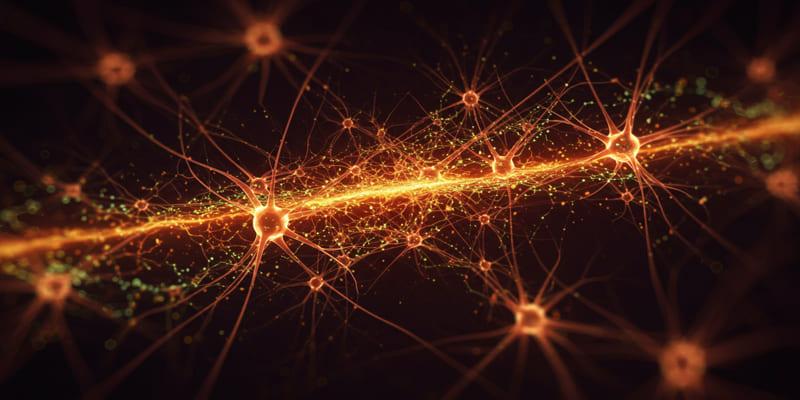
Memory is not a storage file in man. It includes multiple kinds of memory, e.g., sensory, short-term, and long-term, and the memory is linked with emotions, environment, and personal experience. This flexibility enables human beings to generalize textual knowledge, make inferences, and adjust behavior on the basis of previously learnt information.
The most striking difference between AI memory and most forms of memory is that the memory of AI is more like a database in that it contains a collection of information. It depends on computer architectures and algorithms that access stored information in a rather rigid fashion. The conventional AI procedures, like databases, rule-based systems, or neural networks, do not exhibit the capability to improve or generalize on the basis of experience, which shows flexibility that is not observed in human memories.
The introduction of machine learning memory adaptation is changing this paradigm, though. Given this ability for experience-dependent learning, I systems are today able to iteratively build on what they know through exposure to new information, a capability that is central to adaptive memory.
Suppose that our AI systems are able to dynamically combine new information, refine the information that is already stored, learn through their experience, and optimize future actions. In contrast to a static memory, an adaptive memory changes with time, as human thought does.
Such memory systems are trying to ape the resiliency of human memory by:
A number of technologies are used to develop adaptive memory in an AI:

AI has distinct advantages over humans in adapting to memory:
Irrespective of these benefits, there are major challenges to mimicking human memory using AI memory adaptation:
Scientists and programmers are working hard to bridge the current dissimilarity between AI and a human-like adaptive memory by:
Adaptive AI memory is going to revolutionize industries:
The journey towards AI to have its memory adapt to ours is on full swing. As machine learning memory adaptation, neuromorphic computing, and lifelong learning systems are integrated, AI is proving to be promising in the development of AI memory that is human-like. Although the technology is presently incapable of replacing human memory both in richness, emotional depth and contextual knowledge, the technology is improving.
Model behavior mirrors human shortcuts and limits. Structure reveals shared constraints.

Algorithms are interchangeable, but dirty data erodes results and trust quickly. It shows why integrity and provenance matter more than volume for reliability.
A technical examination of neural text processing, focusing on information density, context window management, and the friction of human-in-the-loop logic.
AI tools improve organization by automating scheduling, optimizing digital file management, and enhancing productivity through intelligent information retrieval and categorization

How AI enables faster drug discovery by harnessing crowdsourced research to improve pharmaceutical development
Meta’s AI copyright case raises critical questions about generative music, training data, and legal boundaries

What the Meta AI button in WhatsApp does, how it works, and practical ways to remove Meta AI or reduce its presence
How digital tools like Aeneas revolutionize historical research, enabling faster discoveries and deeper insights into the past.
Maximize your AI's potential by harnessing collective intelligence through knowledge capture, driving innovation and business growth.

Learn the LEGB rule in Python to master variable scope, write efficient code, and enhance debugging skills for better programming.

Find out how AI-driven interaction design improves tone, trust, and emotional flow in everyday technology.

Explore the intricate technology behind modern digital experiences and discover how computation shapes the way we connect and innovate.