 As data science projects become more complex and large-scale, data science and software engineering blend more and more. In today's world, data scientists no longer only create models, but also are expected to write production code, coordinate efficient data pipelines, and communicate effectively with engineering departments. This transformation requires that you have a solid understanding of the principles of software engineering.
The abstract class is one of the fundamentals of OOP, which enables reusable, maintainable, and scalable code. Learning about abstract classes is invaluable to data scientists wishing to produce a clean, extendable code-base, to share work among a team effort, and to improve the quality of their work.
The article describes what abstract classes are and why, in the process of data science work, they deserve attention and knowledge. Why learning how to work with abstract classes is the key to a successful project.
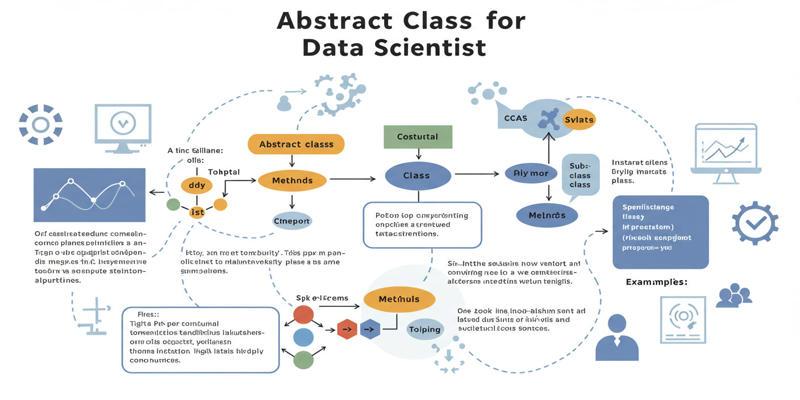
An abstract class is a description of other classes but not a class by itself. It basically specifies a common interface and partial implementation of a group of related subclasses, which enforce that the subclasses will implement certain methods concretely.
The important characteristics of an abstract class are as follows:
Increasing code reusability
Keeping Models and Pipelines the same
Increasing cross-correlation with engineering teams
Facilitating Scalability and Life-cycle Maintenance
Consider you are constructing a machine learning pipeline. An abstract base-class (AbstractModel) may:
The base has concrete model classes such as RandomForestModel or NeuralNetModel, and offers specific implementations.
 Although abstract classes are useful in the provision of common implementations and enforcing classes to implement an abstract method, interfaces (in some languages specify method signatures without any code. The difference in comprehension allows you to use the proper tool in pursuing your data science operations.
A language that is popular in data science, Python, has the ability to create abstract base classes (ABCs) via the abc module: it allows defining abstract methods and ensures that incomplete classes cannot be instantiated.
Start With Clean Code/ Design Principles
Employ Abstract Classes to establish definite Protocols..
Slowly Transform Present-Day Codebases
Cooperate With Software Engineers to Get Best Practices
Use the abc Module of Python to implement
Abstract classes may have their roots in conventional software engineering but they are of great significance to data scientists who are trying to create reliable, reusable and scalable code Understanding this concept and applying it to your codebase not only results in better code right now, but also means you will be aligned in your practices with other engineering teams, be able to innovate and create more.
Then, by adopting abstract classes with a wise mind, you will reach a new threshold of professionalism and production in data science projects and accelerate your personal development and success as well as the success of the initiatives you are undertaking.

Model behavior mirrors human shortcuts and limits. Structure reveals shared constraints.

Algorithms are interchangeable, but dirty data erodes results and trust quickly. It shows why integrity and provenance matter more than volume for reliability.

A technical examination of neural text processing, focusing on information density, context window management, and the friction of human-in-the-loop logic.

AI tools improve organization by automating scheduling, optimizing digital file management, and enhancing productivity through intelligent information retrieval and categorization

How AI enables faster drug discovery by harnessing crowdsourced research to improve pharmaceutical development

Meta’s AI copyright case raises critical questions about generative music, training data, and legal boundaries

What the Meta AI button in WhatsApp does, how it works, and practical ways to remove Meta AI or reduce its presence

How digital tools like Aeneas revolutionize historical research, enabling faster discoveries and deeper insights into the past.

Maximize your AI's potential by harnessing collective intelligence through knowledge capture, driving innovation and business growth.

Learn the LEGB rule in Python to master variable scope, write efficient code, and enhance debugging skills for better programming.

Find out how AI-driven interaction design improves tone, trust, and emotional flow in everyday technology.

Explore the intricate technology behind modern digital experiences and discover how computation shapes the way we connect and innovate.